
Our reviews use research, public data, user feedback, and strict editorial standards for accuracy, clarity, and transparency. Learn how we review products →
Bad breath, also known as halitosis, is something most people experience at some point—often after certain meals or first thing in the morning. While it can feel like a minor inconvenience, it may also be a source of self-consciousness in everyday interactions. What makes it more challenging is that bad breath is often misunderstood. Many people assume it’s simply caused by strong-smelling foods, when in reality, the underlying factors can be more complex.
In many cases, bad breath is closely linked to what’s happening inside the mouth itself. The breakdown of food particles, the presence of oral bacteria, and the role of saliva all contribute to how breath smells. Saliva helps maintain a natural balance by washing away debris and supporting a healthier oral environment. When this balance shifts, it may create conditions where odor becomes more noticeable.
At the same time, not all causes are immediately visible or obvious. Everyday habits, oral hygiene routines, and even subtle changes in the oral microbiome—the community of bacteria living in the mouth—can play an important role. You can learn more about the oral microbiome, including how bacterial balance works in the mouth, and how everyday habits like diet may influence this balance in our diet and oral health guide. In some situations, bad breath may also be associated with broader oral or health-related factors, which is why understanding its possible triggers can be an important first step.

What Is Bad Breath?
Bad breath, medically known as halitosis, refers to an unpleasant odor that comes from the mouth. It is a common experience and is often temporary, such as after eating certain foods or upon waking in the morning. In these cases, the odor typically fades with routine oral hygiene. However, when bad breath persists over time, it may indicate underlying factors that go beyond normal daily fluctuations.
Occasional bad breath is generally linked to short-term causes, such as specific foods, dry mouth during sleep, or temporary changes in oral conditions. Persistent bad breath, on the other hand, is commonly associated with ongoing processes in the mouth that may require closer attention. This distinction is important, as long-lasting odor may be connected to oral hygiene habits, bacterial activity, or other oral health concerns.
In most cases, bad breath originates within the mouth itself. Instead of focusing on a single cause, bad breath is commonly associated with a combination of factors within the mouth, including bacterial activity, oral hygiene habits, and the overall condition of the oral environment. The tongue, teeth, and gum areas can all harbor bacteria that contribute to this process. Saliva plays a key role in helping to wash away particles and maintain balance in the oral environment. When saliva flow is reduced or bacteria accumulate, it may create conditions where unpleasant odors become more noticeable. For a deeper comparison of available options, you can explore our oral health supplements guide.
In clinical settings, persistent bad breath is often evaluated by a dentist to determine whether it is related to oral conditions such as plaque buildup, gum inflammation, or other underlying factors.
Why Bad Breath Happens in the First Place
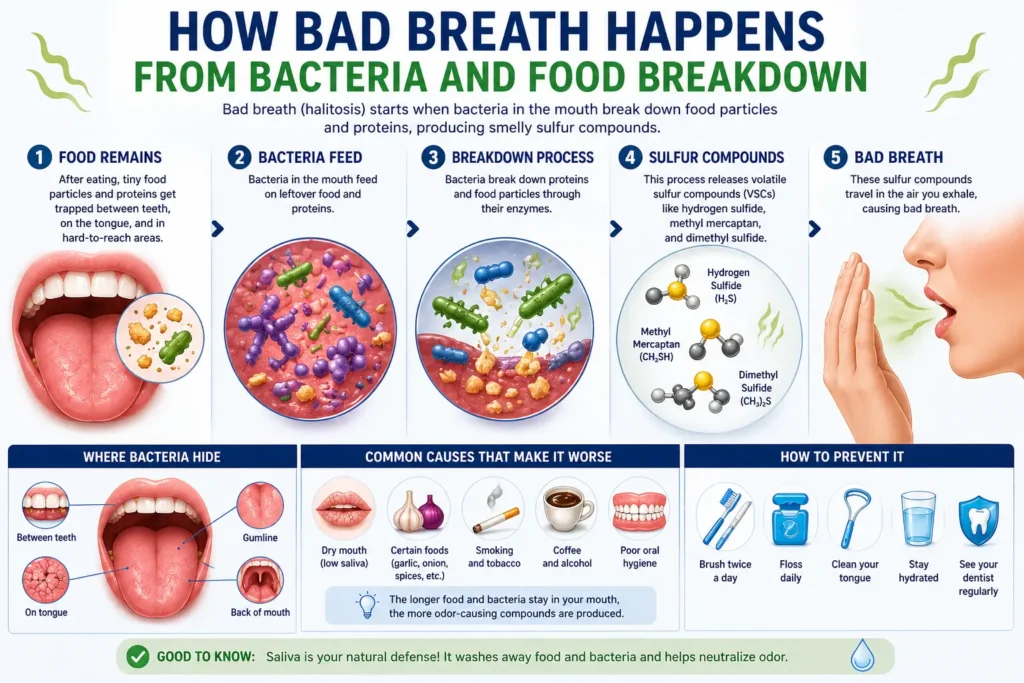
Bad breath often begins with a simple process that happens in the mouth every day: the breakdown of food particles. After eating, tiny bits of food can remain between the teeth, along the gumline, and on the surface of the tongue. These particles are then broken down by naturally occurring oral bacteria. As this process continues, natural byproducts are formed, which can influence how breath smells, especially when buildup is not regularly cleared.
One of the most important yet often overlooked areas is the tongue. Its textured surface provides an ideal environment for bacteria to accumulate, especially toward the back where oxygen levels are lower. This creates conditions where odor-producing bacteria can thrive. Over time, this buildup—sometimes referred to as a coating—may contribute significantly to persistent bad breath if not regularly addressed.
Saliva plays a key protective role in this system. It helps rinse away food debris, neutralize acids, and maintain a balanced oral environment. Throughout the day, normal saliva flow supports this natural cleaning process. However, when saliva production is reduced—such as during sleep, dehydration, or certain conditions—the mouth becomes drier. In a dry environment, bacteria are more likely to multiply and remain on oral surfaces, which may increase the production of odor-causing compounds.
This is why bad breath is often more noticeable in the morning or during periods of low hydration. Without enough saliva to help clear away debris and regulate bacteria, the natural balance in the mouth may shift. As a result, the combination of lingering food particles, bacterial activity, and reduced moisture can create the conditions where bad breath develops more easily.
The Most Common Causes of Bad Breath
Poor Oral Hygiene
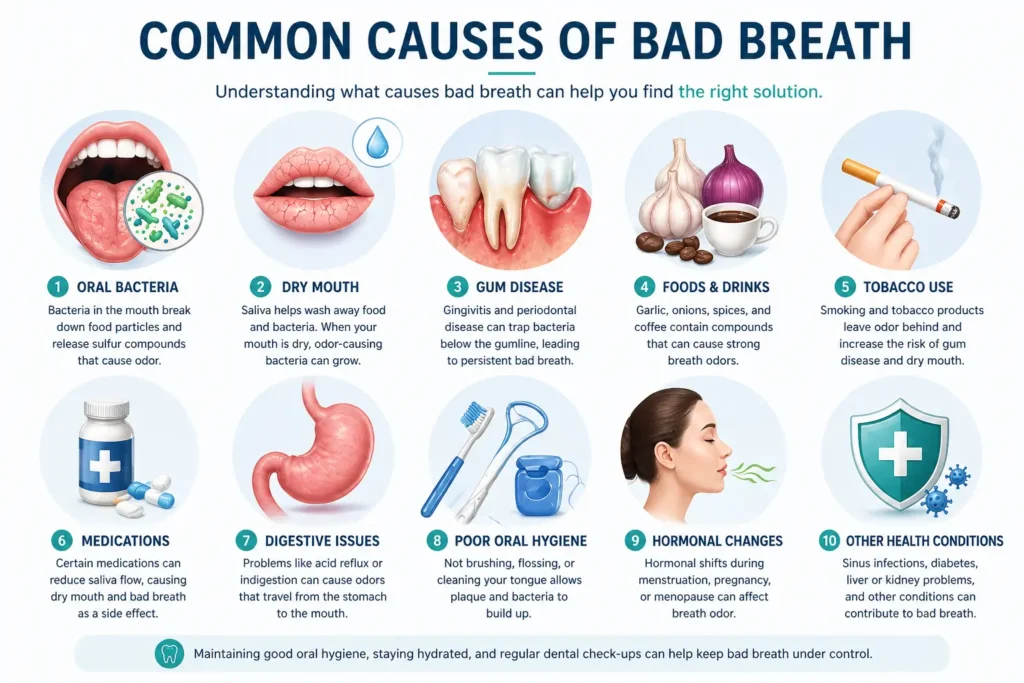
Poor oral hygiene is one of the most common factors associated with bad breath. When brushing and flossing are not done consistently or effectively, food particles can remain trapped between the teeth and along the gumline. These particles are then broken down by bacteria, which naturally live in the mouth. As this process occurs, noticeable changes in breath may develop over time. As plaque accumulates, it can create an environment where bacteria can thrive. Without regular cleaning, this cycle may continue, contributing to persistent unpleasant breath.
Bacteria on the Tongue
The tongue is often overlooked in daily oral care, yet it plays a significant role in breath quality. Its textured surface, especially toward the back, can trap food debris and bacteria. These bacteria interact with organic material on the tongue, which may contribute to noticeable changes in breath over time. A coating on the tongue can form if it is not cleaned regularly, creating a concentrated area for bacterial activity. This is why the tongue is often considered a major source of ongoing odor in the mouth. This is closely related to overall oral bacteria balance.
Gum Disease
Gum disease, including gingivitis and more advanced periodontal conditions, is commonly associated with persistent bad breath. Inflammation of the gums can create pockets between the teeth and gums where bacteria can accumulate. These areas may be difficult to clean with regular brushing alone, allowing bacteria to multiply. As bacterial activity increases, odor-producing compounds may also increase. Signs such as bleeding gums, swelling, or discomfort may accompany these changes, and they can contribute to ongoing oral odor if not addressed. These pockets may create an environment where bacteria can remain undisturbed for longer periods. For more context, see this gum health guide.
In many cases, a dental examination may help identify early signs of gum disease before symptoms become more noticeable, which is why routine checkups are commonly recommended.
Dry Mouth
Dry mouth, or reduced saliva production, can play a key role in the development of bad breath. Saliva helps cleanse the mouth by washing away food particles and limiting bacterial growth. When saliva levels drop—such as during sleep, dehydration, or certain conditions—the mouth becomes a more favorable environment for bacteria. When moisture levels drop, the mouth becomes less efficient at clearing debris, which may allow unwanted buildup to remain longer than usual. This is why bad breath is often more noticeable in the morning or during periods of low hydration. You can also explore broader oral health support in our best oral health supplements.
Certain Foods and Drinks
Some foods and beverages are commonly associated with temporary bad breath. Ingredients like garlic and onions contain sulfur compounds that can enter the bloodstream after digestion and be released through the breath. Coffee and alcohol may also contribute by creating a drier oral environment, which can allow bacteria to become more active. While these effects are often short-lived, they can still influence breath odor, especially when combined with other factors such as reduced saliva or lingering food particles. These factors may also influence how the oral environment functions on a daily basis, beyond just surface-level cleanliness.
Smoking and Tobacco
Smoking and the use of tobacco products can contribute to bad breath in several ways. Tobacco may leave behind a persistent odor, while also affecting the natural balance of bacteria in the mouth. In addition, smoking is commonly associated with dry mouth, which can reduce saliva flow and allow bacteria to accumulate more easily. Over time, tobacco use may also impact gum health, further increasing the likelihood of ongoing breath issues related to bacterial activity.
Tonsil Stones
Tonsil stones, also known as tonsilloliths, are small formations that can develop in the crevices of the tonsils. They are made up of trapped debris such as food particles, dead cells, and bacteria. As this material accumulates, it can harden and create an environment where odor-producing bacteria thrive. Tonsil stones are often associated with a noticeable and persistent odor, particularly when they are dislodged or disturbed.
Acid Reflux or Digestive Issues
Some individuals report a connection between bad breath and digestive concerns, such as acid reflux. In these cases, stomach acids or partially digested food may travel upward, potentially affecting breath odor. While oral causes remain the most common, digestive factors may play a role in certain situations. Changes in the digestive environment may also indirectly influence the mouth, particularly if they affect saliva production or overall oral balance.
Sinus or Post-Nasal Drip
Sinus conditions and post-nasal drip can contribute to bad breath by introducing excess mucus into the throat and mouth. This mucus can trap bacteria and provide additional material for them to break down. As bacteria interact with this buildup, unpleasant odor may develop. Ongoing sinus congestion or throat irritation may therefore be linked to changes in breath quality, especially when combined with other oral factors.
Dental Appliances
Dental appliances such as dentures, retainers, or aligners can also influence breath odor if they are not cleaned properly. These devices can trap food particles and bacteria against oral surfaces, creating an environment where odor may develop. Moisture and warmth around appliances may further support bacterial growth. Regular and thorough cleaning is important to reduce buildup and maintain a balanced oral environment.
Because bad breath can stem from a wide range of causes, identifying the underlying factor is often an important first step. In some cases, improving daily habits may be enough. In others, the issue may be more closely related to bacterial balance or ongoing oral conditions, which may require a broader approach.
When Bad Breath May Be a Sign of Something More Serious
While occasional bad breath is common, there are situations where it may point to a deeper issue that deserves attention. When unpleasant odor persists despite consistent oral hygiene, it may be associated with underlying conditions affecting the gums, oral tissues, or overall health. Recognizing these signs early can help guide appropriate care and prevent more complex problems from developing.
Persistent bad breath is often linked to ongoing bacterial activity, inflammation, or reduced saliva flow. In some cases, it may also be connected to conditions beyond the mouth, such as sinus issues or digestive concerns. Although these situations are not always serious, they may benefit from a professional evaluation to better understand the underlying cause.
- Bad breath that does not improve with regular brushing and flossing
- Bleeding, swollen, or sensitive gums
- Chronic dry mouth or a constant feeling of dryness
- A thick or persistent coating on the tongue
- Loose teeth or discomfort in the gums
- Frequent sore throat or post-nasal drip
- Unusual or strong odors that seem different from typical bad breath
If any of these signs are present, it may be helpful to consult a dentist or healthcare professional. A proper evaluation can identify whether the cause is related to oral health, lifestyle factors, or other conditions. Taking a proactive approach can support both oral hygiene and overall well-being over time.
In clinical practice, persistent halitosis is often assessed through a combination of oral examination and symptom review to better understand its potential causes.
How Oral Bacteria and the Oral Microbiome Are Connected to Bad Breath
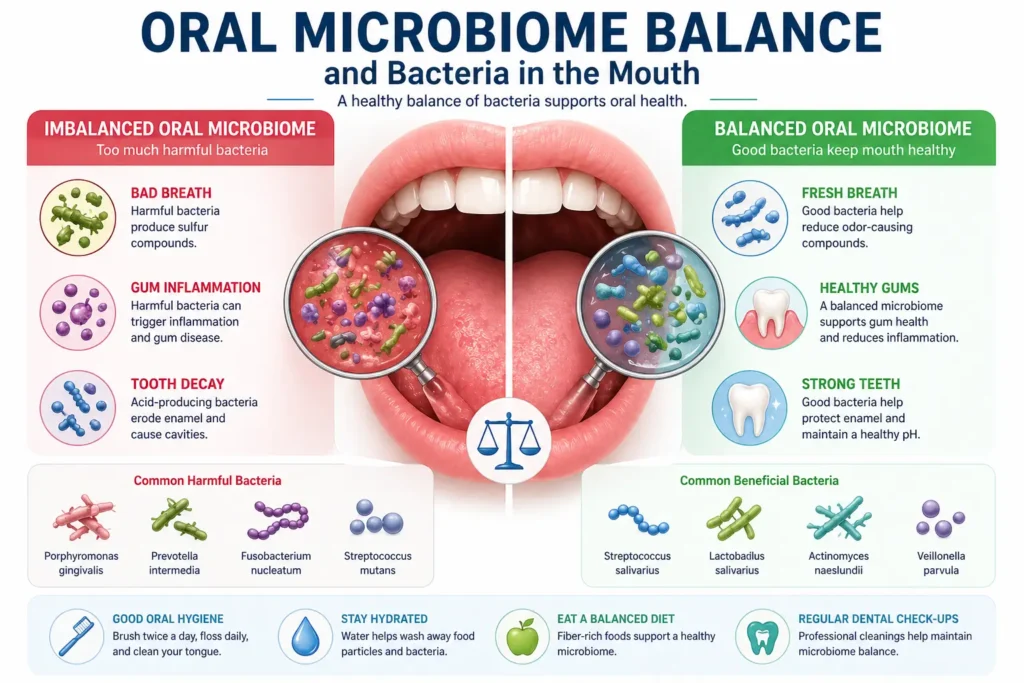
The mouth is home to a diverse community of microorganisms, often referred to as the oral microbiome. This includes both beneficial and potentially harmful bacteria that exist in a natural balance. Under normal conditions, these microorganisms coexist in a way that supports oral health. However, when this balance shifts—whether due to hygiene habits, diet, dry mouth, or other factors—it may create an environment where odor-producing bacteria become more dominant.
Rather than being caused by a single factor, bad breath is often linked to how different types of bacteria interact within the oral environment. In many cases, everyday factors such as diet may influence this balance over time, especially when the overall balance begins to shift. During this process, they can release compounds that contribute to unpleasant odors. Learn how diet may affect oral bacteria, plaque formation, and gum health → While these bacteria are naturally present, their impact may become more noticeable when they are allowed to multiply or when protective factors, such as saliva, are reduced. This highlights the importance of maintaining a balanced oral environment rather than focusing on eliminating bacteria entirely.
Brushing and flossing remain essential parts of oral care, as they help remove food debris and reduce bacterial buildup on the teeth and gums. However, these practices primarily address surface-level factors. They may not fully influence the broader balance of microorganisms within the mouth, especially in areas that are harder to reach or in conditions where the microbiome has already shifted. This is why some approaches to oral health also consider the internal environment and the role of beneficial bacteria.
Understanding how the oral microbiome functions can provide useful context when exploring the causes of bad breath. Factors such as gum health, saliva flow, and daily habits all interact with this microbial ecosystem. For a deeper look at how the oral microbiome may influence bacterial balance and everyday oral health, you can explore our oral microbiome guide. You may also find it helpful to learn more about gum health, as the condition of the gums is closely connected to the overall environment in which these bacteria exist. You can also review different approaches in our oral health supplements guide.
Because of this connection, some individuals look beyond basic oral hygiene and begin considering ways to support bacterial balance more directly, especially when bad breath seems persistent despite regular care.
How to Reduce Bad Breath Based on the Cause
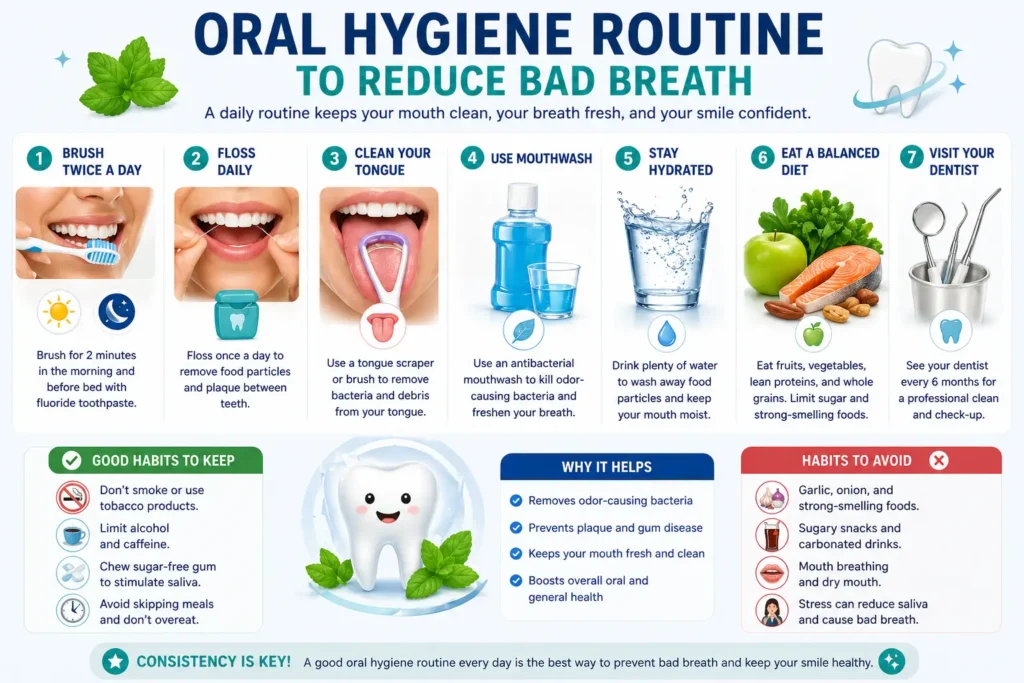
- Maintain consistent oral hygiene: Brushing at least twice daily and flossing regularly can help remove food particles and reduce plaque buildup. This may limit the amount of material that bacteria can break down, which is commonly associated with odor formation.
- Clean the tongue regularly: The surface of the tongue can trap bacteria and debris, particularly toward the back. Using a tongue scraper or gently brushing the tongue may help reduce buildup that can contribute to persistent bad breath.
- Stay well hydrated: Drinking enough water throughout the day supports saliva production. Since saliva helps rinse away particles and maintain oral balance, adequate hydration may reduce conditions that allow odor-causing bacteria to thrive.
- Schedule regular dental checkups: Routine visits to a dentist can help identify and manage issues such as plaque buildup, gum irritation, or other oral concerns that may be linked to bad breath. Professional cleanings can also reach areas that are difficult to address at home.
- Adjust daily habits and lifestyle factors: Reducing smoking or tobacco use, moderating alcohol and coffee intake, and being mindful of certain foods may help limit temporary or ongoing breath odor. In some cases, addressing mouth breathing or improving sleep habits may also support a healthier oral environment.
- Care for dental appliances properly: If you use dentures, retainers, or aligners, regular and thorough cleaning is important. These devices can trap bacteria and debris, so maintaining proper hygiene may help reduce odor-related concerns.
Because bad breath can stem from different underlying factors, a combination of daily habits is often more effective than focusing on a single approach. For readers comparing additional support options, see our oral health supplements guide.
Aligning oral hygiene practices, hydration, and lifestyle choices with the specific cause may help support fresher breath over time. If concerns persist despite these efforts, a dental or healthcare professional can provide further guidance based on individual needs.
While daily oral hygiene habits such as brushing, flossing, and tongue cleaning are essential, some individuals find that these steps alone may not fully address persistent bad breath. In these situations, attention often shifts toward internal factors such as bacterial balance and the overall oral environment.
Because of this, some people begin exploring additional approaches that go beyond surface-level care. This may include supporting the oral microbiome and maintaining a more balanced environment within the mouth, especially when odor appears to be recurring or linked to deeper factors.
Can Oral Health Supplements Help With Bad Breath?
Oral health supplements are sometimes explored as an additional approach for managing bad breath, particularly when it is linked to internal factors such as bacterial balance or gum health. It is important to note that these products are not intended to cure bad breath or replace essential oral hygiene practices. Brushing, flossing, tongue cleaning, and regular dental care remain the foundation of maintaining fresh breath and overall oral health.
That said, some supplements are designed to support aspects of the oral environment, including the balance of the oral microbiome. These formulations may contain probiotics, plant extracts, or nutrients that are commonly associated with oral health. The idea behind this approach is to support a more balanced microbial environment, which may help reduce the conditions that allow odor-causing bacteria to thrive. However, their role is generally considered supportive rather than corrective.
When used alongside consistent daily habits, oral health supplements may offer an added layer of support for some individuals. Their effectiveness can vary depending on factors such as the underlying cause of bad breath, overall oral hygiene, diet, and individual response. For those interested in learning more about available options and how they compare, you can explore this guide to the best oral health supplements. You may also want to review specific product breakdowns such as ProDentim review or Steel Bite Pro review for deeper comparisons. As with any supplement, it may be helpful to review ingredients carefully and consider professional advice if needed.
Quick Take: Most bad breath is linked to bacterial activity and daily habits. However, when symptoms persist, it may be helpful to look beyond surface-level care and consider broader oral health factors. You can explore different approaches in our oral health supplements guide.
FAQs About Bad Breath Causes
What is the most common cause of bad breath?
Can bad breath come from the stomach?
Why does my breath smell bad after brushing?
Can dry mouth cause bad breath?
Can gum disease cause bad breath?
How do I know if it’s serious?
How can I prevent bad breath?
Final Thoughts
Bad breath is a common concern, and in many cases, it is closely linked to everyday factors such as oral bacteria, hygiene habits, and moisture levels in the mouth. While occasional odor can be part of normal daily fluctuations, persistent bad breath is often associated with ongoing bacterial activity or imbalances within the oral environment. Understanding these underlying factors can make it easier to approach the issue in a more informed and practical way.
Maintaining a consistent oral care routine remains essential. Regular brushing, flossing, and attention to areas like the tongue can help reduce the buildup of odor-causing bacteria. At the same time, supporting the natural balance of the oral microbiome may also play a role, as this ecosystem influences how bacteria behave within the mouth. When this balance is disrupted, it may contribute to conditions where bad breath becomes more noticeable.
A balanced approach that combines daily hygiene, hydration, routine dental care, and diet may provide a more complete way to support oral health. Awareness of lifestyle factors is also important over time. Learn how diet may impact bad breath, gums, and oral microbiome balance →
For readers looking to explore additional options, you can review our oral health supplements guide. Since individual experiences can vary, ongoing or persistent symptoms may benefit from professional guidance to better understand the underlying cause and appropriate next steps.
From a broader oral health perspective, consistent care combined with professional evaluation may provide a more reliable way to manage ongoing breath concerns.
About the Author
Alex Morgan writes about oral wellness, focusing on gum health, oral hygiene routines, and ingredient-based supplement reviews. His work aims to present clear, practical insights to help readers better understand how daily habits and product choices may support long-term oral health.