
Our reviews use research, public data, user feedback, and strict editorial standards for accuracy, clarity, and transparency. Learn how we review products →
If you’ve ever noticed bleeding gums while brushing, persistent bad breath that doesn’t go away, or a feeling that your mouth never quite feels clean, these may be more than just surface-level issues. In many cases, they are linked to something deeper—an imbalance in oral bacteria.
While most oral care advice focuses on removing bacteria, fewer discussions explore why balance—not elimination—may be the more relevant goal.
Many people focus on brushing and flossing as the foundation of oral care. While these habits are essential, they are only part of the bigger picture. Issues like bad breath, gum irritation, or plaque buildup often point to an underlying shift in the oral environment. Understanding oral bacteria balance can help explain why some problems persist even with regular hygiene routines.
What Is Oral Bacteria Balance?
Oral bacteria balance refers to the state of equilibrium within the oral microbiome—a complex community of microorganisms living in your mouth. This includes both beneficial (“good”) and potentially harmful (“bad”) bacteria.
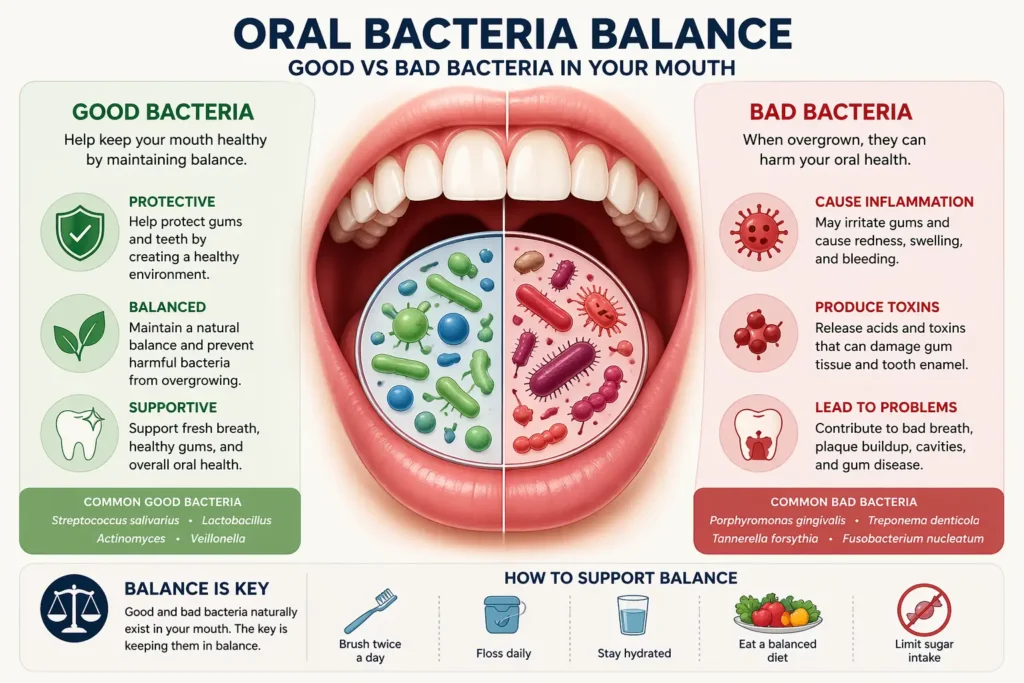
In a balanced state, these microorganisms coexist without causing harm. Beneficial bacteria may help regulate the growth of harmful species and contribute to a stable oral environment. However, when this balance is disrupted, harmful bacteria may begin to dominate.
In real life, this balance influences everyday experiences such as breath freshness, gum comfort, and how clean your mouth feels throughout the day. When oral bacteria are in harmony, your gums and teeth are more likely to remain stable and resilient.
Why Oral Bacteria Balance Matters
Maintaining oral bacteria balance is not just about preventing surface-level issues—it is closely connected to long-term oral health. The mouth is constantly exposed to food, drinks, and environmental factors, making it a dynamic ecosystem.
When balance is maintained, it may help:
– Limit excessive plaque formation
– Support healthy gum tissue
– Reduce the likelihood of persistent bad breath
– Promote a more stable oral environment over time
On the other hand, an imbalance—often called dysbiosis—may create conditions where harmful bacteria thrive. This can contribute to inflammation, gum sensitivity, and increased plaque accumulation. Over time, this imbalance may affect how well your gums support your teeth.
Understanding Good vs. Bad Bacteria
The distinction between “good” and “bad” bacteria is not always absolute, but it helps explain how the oral microbiome functions.
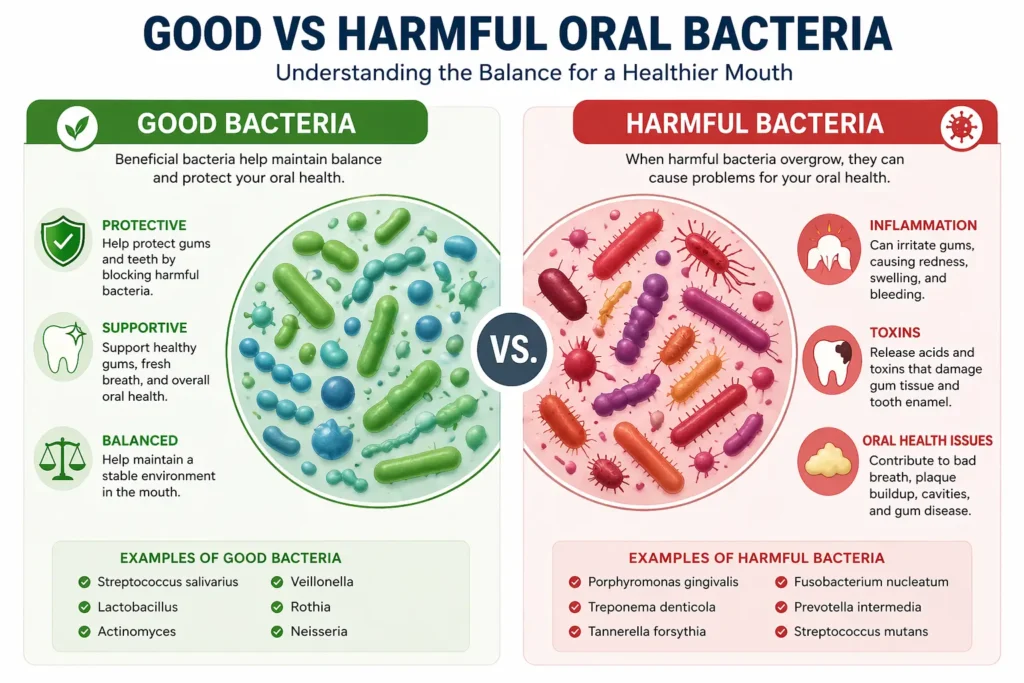
Beneficial bacteria are commonly associated with maintaining balance. They may help control the growth of harmful species and contribute to a neutral oral environment.
Harmful bacteria, when present in higher amounts, may produce acids and toxins that irritate the gums and contribute to plaque buildup.
In everyday terms, this balance determines whether your mouth feels clean and comfortable—or prone to irritation and odor. A healthy ratio of bacteria supports gum health, while an imbalance may increase the risk of inflammation and tissue sensitivity.
Key Factors That Influence Oral Bacteria Balance
1. Diet and Sugar Intake
What you eat directly affects the bacteria in your mouth. Diets high in sugar and refined carbohydrates provide fuel for certain harmful bacteria, allowing them to multiply more rapidly.
In real life, frequent snacking or sugary drinks can create a constant supply of nutrients for these bacteria. This may lead to increased plaque formation and a shift in bacterial balance.
From an oral health perspective, this imbalance may contribute to gum irritation and a less stable oral environment over time.
2. Daily Oral Hygiene Habits
Brushing and flossing are external care practices designed to physically remove plaque and reduce bacterial buildup.
Consistent hygiene helps maintain a healthier balance by limiting the growth of harmful bacteria. However, overly aggressive cleaning or inconsistent routines may disrupt this balance rather than support it.
In practical terms, effective hygiene supports gum health by reducing the bacterial load along the gumline, where inflammation often begins.
3. Saliva and Hydration
Saliva plays a key role in regulating oral bacteria. It helps wash away food particles, neutralize acids, and maintain a balanced environment.
Dehydration or reduced saliva flow may allow bacteria to accumulate more easily. This is often associated with dry mouth and persistent bad breath.
For oral health, adequate saliva supports both bacterial balance and gum protection, acting as a natural defense mechanism.
4. Lifestyle and Internal Factors
Stress, sleep quality, and overall health can influence how your body responds to bacteria in the mouth.
For example, chronic stress may affect immune function, potentially making it harder for the body to regulate bacterial growth. Similarly, nutrient intake can influence tissue repair and inflammation levels.
This highlights the connection between internal health and oral bacteria balance—what happens inside the body can shape the condition of your gums and oral tissues.
How Imbalance May Affect Breath, Gums, and Plaque
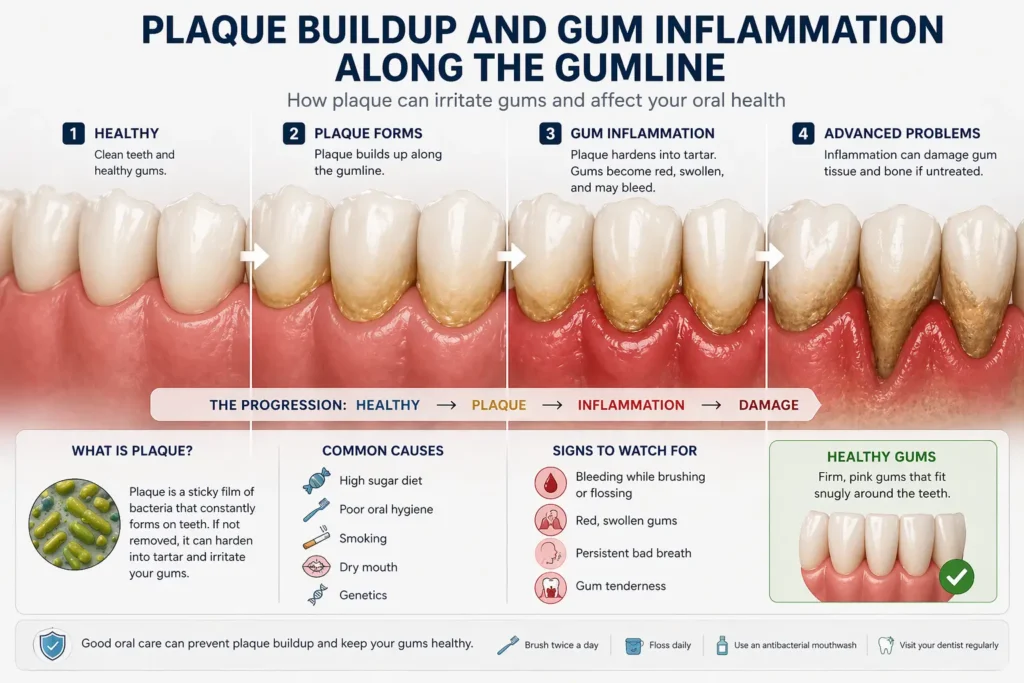
When oral bacteria balance is disrupted, the effects often appear gradually in everyday symptoms.
Breath: Certain bacteria produce sulfur compounds, which are commonly associated with bad breath. An imbalance may increase the presence of these odor-causing microbes.
Gums: Harmful bacteria may trigger inflammation, leading to redness, swelling, or bleeding. This is often one of the earliest signs of imbalance.
Plaque: Excess bacterial growth contributes to plaque buildup, which can harden into tartar if not removed.
These changes are interconnected. For example, increased plaque may further disrupt bacterial balance, creating a cycle that affects gum health over time.
Why Balance Matters More Than Just Cleaning
While cleaning removes bacteria from the surface, it does not necessarily address the underlying balance of the oral microbiome.
In real-world terms, someone may brush regularly but still experience gum issues or bad breath if the internal environment supports harmful bacteria growth.
Focusing on balance means considering both:
– External care (brushing, flossing, rinsing)
– Internal factors (diet, hydration, overall health)
This combined approach may help create a more stable oral environment, supporting long-term gum health and reducing the likelihood of recurring issues.
Can Internal Support Help?
In addition to daily hygiene, some people explore internal approaches to support oral bacteria balance. This may include dietary adjustments or supplements formulated with nutrients and plant-based compounds.
These products are commonly used to support:
– A balanced inflammatory response
– Tissue health and repair processes
– A more stable internal environment that may influence oral conditions
However, it’s important to understand that supplements are not a substitute for brushing, flossing, or professional dental care. Instead, they may be considered as part of a broader strategy that includes both internal and external support.
The goal is not to eliminate bacteria entirely, but to maintain a balanced ecosystem where beneficial bacteria can coexist with minimal disruption.
Conclusion
Oral bacteria balance plays a central role in maintaining gum health, breath freshness, and long-term oral stability. Rather than focusing solely on removing bacteria, a more complete approach involves supporting a balanced oral environment.
Daily habits such as diet, hygiene, and hydration all contribute to this balance. By understanding how these factors interact, it becomes easier to make informed decisions that support overall oral health.
For a broader understanding of how gum health develops over time, you can explore this gum health guide.
For individuals exploring additional ways to support oral balance beyond daily hygiene, some people look into oral health supplements as part of a broader approach.
About the Author
Alex Morgan writes about oral wellness, focusing on gum health, oral hygiene routines, and ingredient-based supplement reviews. His work aims to present clear, practical insights to help readers better understand how daily habits and product choices may support long-term oral health.