
Our reviews use research, public data, user feedback, and strict editorial standards for accuracy, clarity, and transparency. Learn how we review products →
If you brush and floss daily but still notice gum sensitivity, bad breath, or recurring plaque buildup, the issue may not be just surface-level—it may be linked to internal factors that influence oral health.
While traditional oral care focuses on removing plaque, fewer discussions explain how internal factors like nutrition, inflammation, and bacterial balance may influence long-term gum stability.
Most people rely on brushing, flossing, and mouthwash to maintain oral hygiene. Yet, despite consistent routines, some still experience ongoing issues. This has led to growing interest in supplements for teeth and gums—products designed to support oral health from within rather than just on the surface.
Supplements for teeth and gums are products formulated with vitamins, minerals, herbs, and plant-based compounds that are commonly used to support oral health internally. Unlike traditional oral care products, these supplements are typically taken as capsules, powders, or liquids.
In real life, these supplements are often used by individuals looking to complement their daily oral hygiene routine, especially when external care alone does not seem sufficient. They are associated with supporting processes such as tissue maintenance, inflammatory response, and overall oral environment balance.
From an oral health perspective, these supplements connect to the idea that the condition of your gums and teeth is influenced not only by what happens in your mouth, but also by internal factors such as nutrition, immune response, and bacterial balance.
Why Supplements for Teeth and Gums Matter
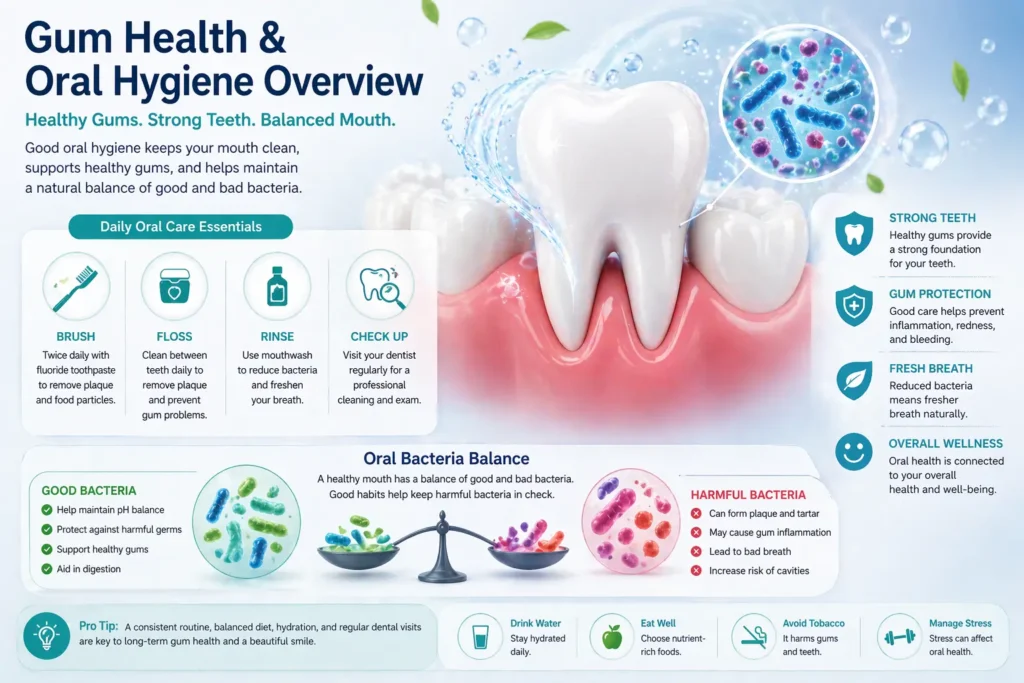
Oral health is closely linked to the balance of bacteria in the mouth and the body’s response to those bacteria. While brushing and flossing remove plaque and food particles, they do not directly influence internal biological processes.
In everyday terms, this means that even with good hygiene, factors like inflammation, nutrient intake, or immune function may still affect gum health.
Supplements for teeth and gums may matter because they are commonly used to:
- Support normal inflammatory responses
- Promote gum tissue health
- Contribute to oral bacteria balance
- Provide nutrients related to oral structure and function
These effects are relevant because healthier internal conditions may support stronger, more resilient gums and a more stable oral environment over time.
Systemic vs. Surface Care: Understanding the Difference
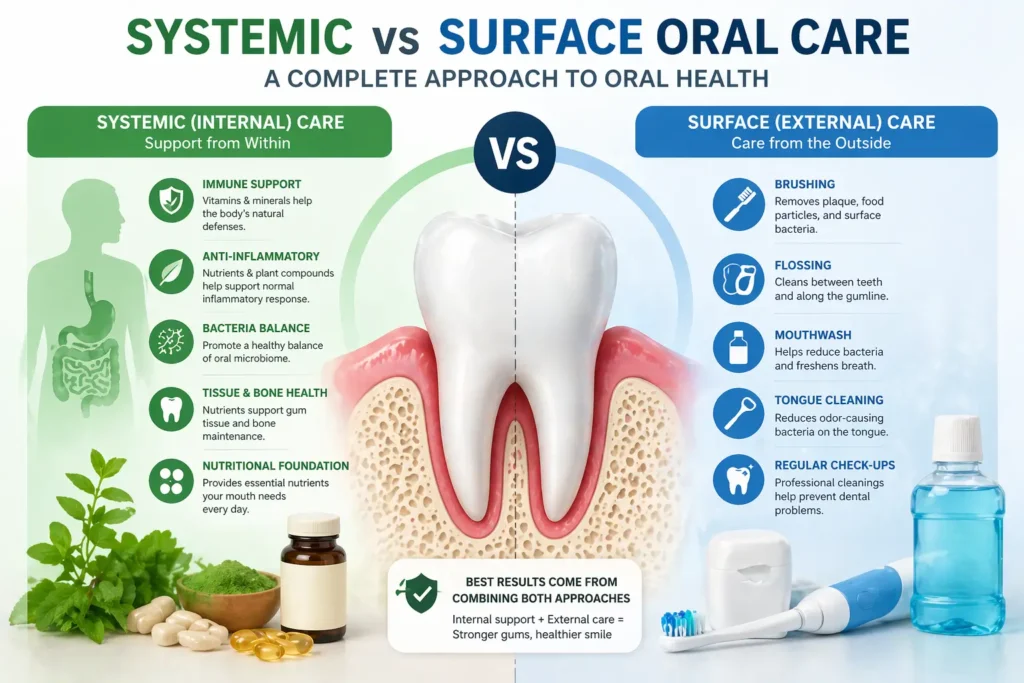
Oral care can generally be divided into two categories: surface (external) care and systemic (internal) support.
Surface care includes brushing, flossing, and mouthwash. These methods physically remove plaque and reduce bacteria on the surface of teeth and gums.
Systemic care refers to supporting the body from within. This includes nutrition, hydration, and the use of supplements that may influence how the body maintains oral tissues.
In real life, both approaches play a role. Surface care helps manage immediate buildup, while systemic support may influence how the body responds to bacteria and repairs tissues.
For oral health, combining these approaches may provide a more comprehensive strategy, as gum health is influenced by both external cleanliness and internal resilience.
Common Ingredients in Oral Health Supplements
Supplements for teeth and gums often include a range of nutrients and plant-based compounds selected for their association with general health processes.
1. Vitamins and Minerals
Nutrients such as vitamin C, vitamin D, calcium, and zinc are commonly included due to their association with tissue health, immune support, and structural maintenance.
In real life, insufficient intake of certain nutrients may affect how the body maintains gum tissue and responds to inflammation, which can influence oral health over time.
2. Herbal Extracts
Plant-based ingredients like clove, neem, or licorice root are often used in traditional oral care practices.
These herbs are commonly associated with antimicrobial or soothing properties, which may support a balanced oral environment when combined with consistent hygiene habits.
3. Antioxidants and Plant Compounds
Compounds such as polyphenols and flavonoids are included for their association with reducing oxidative stress and supporting normal inflammatory responses.
In practical terms, this may help support gum comfort and overall oral stability.
Key Factors That Influence Effectiveness
1. Daily Habits
Supplements are only one part of the equation. Diet, brushing habits, and flossing routines continue to play a major role in oral health.
For example, high sugar intake may encourage harmful bacteria growth, potentially reducing the effectiveness of supplements aimed at supporting bacterial balance.
2. Oral Bacteria Balance
The mouth contains a complex ecosystem of bacteria. Supplements may aim to support a more balanced environment, but they do not physically remove plaque.
Maintaining this balance is important because an overgrowth of harmful bacteria is associated with gum irritation and plaque formation.
3. Individual Variation
Responses to supplements can vary depending on overall health, diet, and consistency of use.
In real life, some individuals may notice improvements in gum comfort or breath freshness, while others may experience more gradual changes.
Limitations of Supplements for Teeth and Gums
It is important to understand that supplements for teeth and gums are not a replacement for traditional oral hygiene practices.
Brushing and flossing remain essential for removing plaque and maintaining surface cleanliness. Supplements do not physically clean teeth or gums.
Additionally, results may vary depending on formulation, consistency, and lifestyle factors.
From an oral health perspective, supplements are best viewed as a complementary approach rather than a standalone solution.
When Do People Consider Supplements?
People often explore supplements when they are looking for additional support beyond basic oral care.
- Persistent gum sensitivity despite regular brushing
- Ongoing concerns about breath freshness
- Interest in supporting oral health through nutrition and internal care
These considerations reflect a broader understanding that oral health is influenced by both external habits and internal factors.
How to Improve Oral Health Holistically
A comprehensive approach to oral health involves combining external care with internal support.
External care:
- Brushing twice daily
- Flossing regularly
- Routine dental checkups
Internal support:
- Balanced diet with essential nutrients
- Adequate hydration
- Managing overall health and lifestyle factors
Supplements for teeth and gums may fit into this framework as an additional layer of support, helping address internal aspects that external care alone may not cover.
Conclusion
Supplements for teeth and gums represent an approach that focuses on supporting oral health from within. By addressing factors such as nutrient intake, inflammation, and bacterial balance, they may complement traditional hygiene practices.
However, they are not a substitute for brushing, flossing, or professional care. A balanced approach that includes both internal and external strategies is generally more effective for maintaining long-term gum health and oral stability.
To better understand how bacterial balance influences oral conditions, you can explore this oral bacteria balance guide.
For those exploring internal approaches to oral health, some people look into oral health supplements as part of a broader routine.
If you’re comparing different approaches, understanding ingredient roles and how they fit into your routine may help you make a more informed decision over time.
About the Author
Alex Morgan writes about oral wellness, focusing on gum health, oral hygiene routines, and ingredient-based supplement reviews. His work aims to present clear, practical insights to help readers better understand how daily habits and product choices may support long-term oral health.