
Our reviews use research, public data, user feedback, and strict editorial standards for accuracy, clarity, and transparency. Learn how we review products →
Many people brush their teeth every day, yet still experience issues like bad breath, gum sensitivity, or plaque buildup. In many cases, this comes down to how consistent and complete their daily oral care routine really is. A well-structured oral care routine is not just about brushing harder or longer—it is about combining the right habits in a sustainable way that supports both the surface of the teeth and the overall oral environment.
What Is a Daily Oral Care Routine?
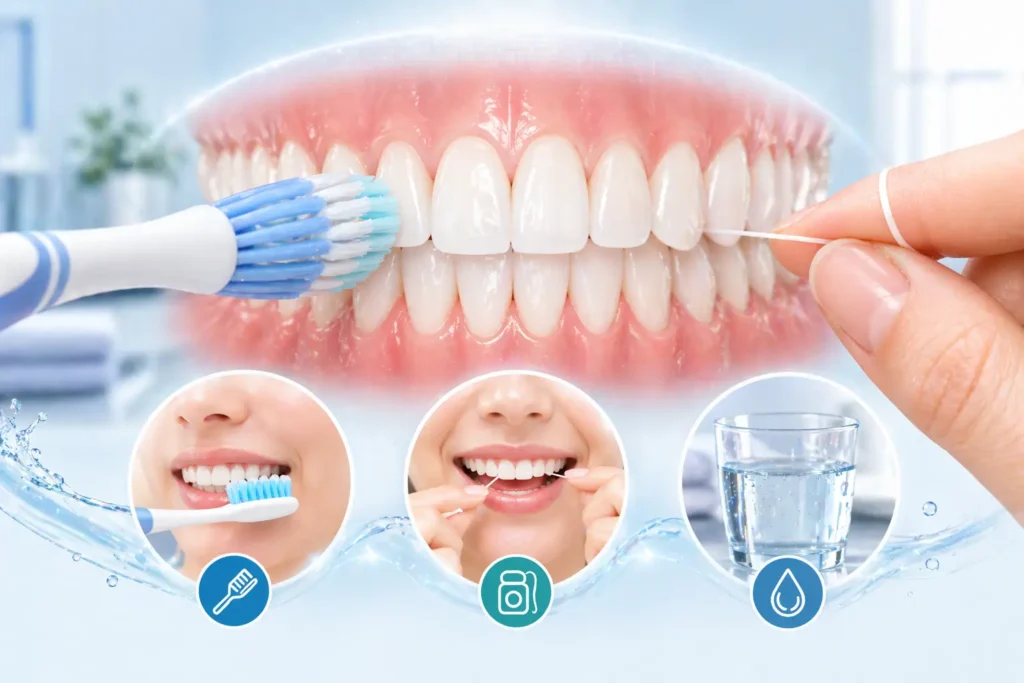
A daily oral care routine refers to the set of oral hygiene habits used to maintain the health of your teeth, gums, and overall mouth environment. This typically includes brushing, flossing, and other supportive practices such as rinsing and staying hydrated.
In real life, an effective oral care routine is less about perfection and more about consistency. Small actions performed regularly—such as brushing twice a day or flossing before bed—often have a greater long-term effect than occasional intensive care.
From an oral health perspective, a proper routine helps manage oral bacteria, reduce plaque buildup, and support gum health. These factors are closely connected, as the balance of bacteria in the mouth plays a key role in long-term oral stability.
Why a Daily Oral Care Routine Matters
Your mouth is constantly exposed to food, beverages, and environmental factors that influence bacterial activity. Without regular care, bacteria can accumulate and form plaque, which may contribute to gum irritation and other concerns over time.
In everyday terms, a consistent daily oral care routine may help:
- Maintain fresher breath throughout the day
- Support healthy-looking gums
- Reduce plaque buildup along the gumline
- Promote a more balanced oral environment
This matters for oral health because gums and teeth rely on a stable environment to function properly. When bacteria are not managed consistently, they may disrupt this balance and contribute to inflammation, sensitivity, or discomfort.
To better understand this connection, you can also explore this guide on oral bacteria balance.
Key Components of a Proper Oral Care Routine
1. Brushing
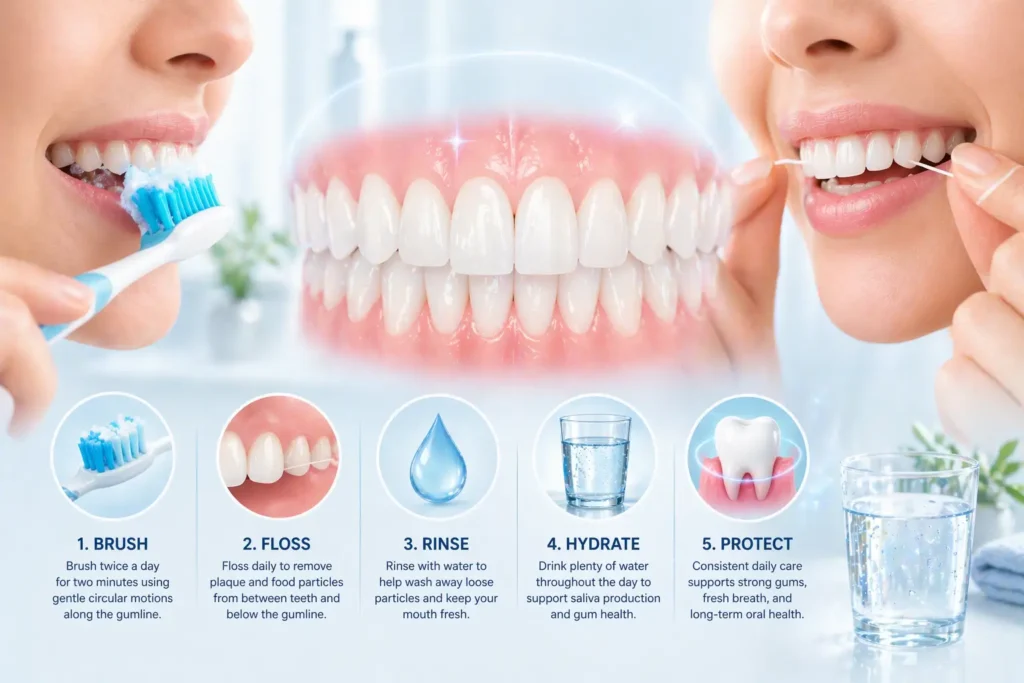
Brushing is the foundation of any oral care routine. It involves using a toothbrush and toothpaste to remove plaque and food particles from the surface of the teeth.
In real life, brushing twice daily—especially in the morning and before bed—helps limit bacterial buildup. However, technique is just as important as frequency. Gentle, thorough brushing along the gumline is generally more effective than aggressive scrubbing.
For oral health, brushing helps control surface bacteria and supports gum health by reducing irritation caused by plaque accumulation.
2. Flossing
Flossing targets areas that brushing cannot reach, particularly between the teeth and just below the gumline.
In everyday situations, skipping flossing can allow bacteria and debris to remain in these tight spaces. Over time, this may contribute to gum sensitivity or inflammation.
From an oral health standpoint, flossing supports gum health by reducing bacterial buildup in areas where gum issues often begin.
3. Hydration and Saliva Support
Hydration plays an often-overlooked role in daily oral care. Drinking enough water supports saliva production, which helps wash away food particles and neutralize acids.
In real life, dry mouth can lead to increased bacterial activity and bad breath. Staying hydrated throughout the day may help maintain a more balanced oral environment.
This connection is important because saliva acts as a natural defense system, supporting oral bacteria balance and helping protect gum tissue.
Common Mistakes in Daily Oral Care
Even with good intentions, certain oral hygiene habits may reduce the effectiveness of an otherwise solid daily oral care routine.
1. Brushing Too Aggressively
Some people believe that brushing harder leads to cleaner teeth. In reality, aggressive brushing may irritate the gums and gradually wear down enamel.
This matters in real life because it can contribute to gum sensitivity and discomfort, making oral care feel less sustainable over time.
2. Skipping Flossing
Flossing is often overlooked due to time constraints or inconvenience. However, this step remains important for removing bacteria and debris in hard-to-reach areas.
Neglecting flossing may allow plaque to build up between teeth, increasing the likelihood of gum issues developing along those spaces.
3. Inconsistency
One of the most common challenges is inconsistency. Performing an oral care routine irregularly may reduce its effectiveness, even if the individual steps are done well.
In real life, consistency matters more than intensity. A simple oral hygiene routine followed daily is generally more beneficial than an occasional, more intensive effort.
Internal vs. External Oral Care
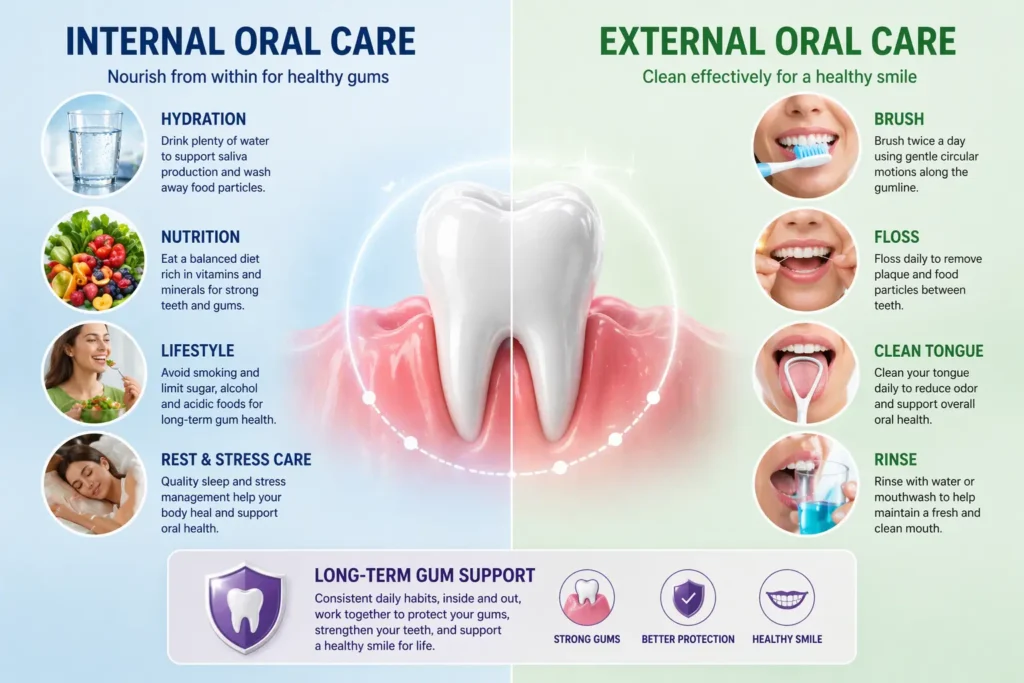
An effective daily oral care routine includes both external and internal approaches.
External care involves physical cleaning methods such as brushing and flossing. These habits help remove plaque and reduce bacteria on the surface of the teeth and gums.
Internal care focuses on factors inside the body, such as diet, hydration, and overall health. These factors may influence how the body responds to bacteria and how well gum tissue is maintained over time.
In real life, combining both approaches may support a more balanced oral environment. While external care helps manage immediate buildup, internal factors may influence long-term gum health and resilience.
For more context on why gums are so important, see this gum health guide.
How to Improve Your Daily Oral Care Routine
Improving your oral care routine does not necessarily require adding more steps. In many cases, it simply involves refining your existing oral hygiene habits.
Practical ways to improve daily oral care include:
- Brushing gently but thoroughly for at least two minutes
- Flossing daily, preferably before bedtime
- Drinking water regularly throughout the day
- Maintaining a balanced diet with reduced sugar intake
These habits may help regulate oral bacteria, support gum health, and create a more stable environment for long-term oral wellness.
They may also support healthier gums over time, especially when combined with the principles explained in this gum health guide.
Where Supplements May Fit in a Routine
Some individuals consider supplements as an additional way to support oral health from within. These products are often formulated with nutrients, herbs, or plant compounds associated with tissue health and bacterial balance.
In real life, supplements may be used as a complementary approach, particularly when people are looking to support internal factors such as inflammation response or nutrient intake.
However, they are not essential for everyone and should not replace brushing, flossing, or regular dental care. Instead, they may be viewed as an optional layer of support within a broader oral care routine.
For oral health, the most important foundation still remains consistent daily habits that help manage bacteria and protect the gums.
Conclusion
A well-balanced daily oral care routine is built on simple, consistent habits that work together to support both teeth and gums. By focusing on brushing, flossing, hydration, and overall lifestyle factors, it may be possible to maintain a healthier and more stable oral environment over time.
Understanding the role of oral bacteria, gum health, and daily oral hygiene habits helps create a more complete approach to oral care—one that goes beyond surface cleaning alone.
For those exploring additional ways to support oral health, some people choose to look into oral health supplements as part of a broader routine. These options are typically used to complement daily habits rather than replace them.
About the Author
Alex Morgan writes about oral wellness, focusing on gum health, oral hygiene routines, and ingredient-based supplement reviews. His work aims to present clear, practical insights to help readers better understand how daily habits and product choices may support long-term oral health.